
How Americans Are Budgeting in 2026: Realistic Money Habits That Actually Work. Budgeting in the USA in 2026 is no longer about spreadsheets, extreme frugality, or unrealistic money rules. For millions of Americans, budgeting has become a survival skill, not a personal finance trend. Rising living costs, higher rent, expensive groceries, and ongoing economic uncertainty have forced people to rethink how they manage money.
Search trends show that Americans are actively looking for realistic budgeting methods, simple monthly budgets, and practical saving strategies that actually fit
today’s lifestyle. Many people are asking the same questions: How are other Americans budgeting right now? What really works in 2026? How can I budget when everything feels expensive?
This article answers those questions honestly. We’ll explore how Americans are budgeting in 2026, the money habits that are actually working, and the practical budgeting strategies people are using to stay financially stable—even when money feels tight.
If you’re searching for budgeting and saving money in the USA, this guide focuses on real solutions, not outdated advice.
Why Budgeting Has Become a Priority for Americans in 2026
Budgeting in the USA has always been important, but in 2026 it has become unavoidable. The traditional idea of “saving whatever is left at the end of the month” no longer works for most households.
The Real Financial Challenges Americans Face
Americans are budgeting differently because:
-
Housing costs remain high in many cities
-
Grocery prices continue to strain monthly budgets
-
Utilities, insurance, and transportation costs have increased
-
Credit card balances are higher than ever
-
Many households live paycheck to paycheck
As a result, people are no longer searching for “perfect budgets.” Instead, they want flexible budgeting systems that help them control spending, reduce stress, and save consistently—even if it’s a small amount.
Budgeting in 2026 is about control, clarity, and peace of mind, not perfection.
How Americans Are Budgeting in 2026: The Big Shift
One of the biggest changes in budgeting behavior is that Americans are moving away from rigid financial rules and toward personalized money systems.
From Ideal Budgets to Realistic Budgets
In the past, advice focused on strict percentages or aggressive savings goals. In 2026, Americans are:
-
Adjusting budgets monthly
-
Prioritizing essentials first
-
Saving smaller amounts consistently
-
Allowing flexibility for real life
This shift reflects what people are actually searching for: “How to budget realistically” and “budgeting that actually works.”
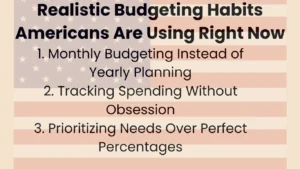
Realistic Budgeting Habits Americans Are Using Right Now
1. Monthly Budgeting Instead of Yearly Planning
Most Americans are budgeting month by month rather than planning an entire year in advance. Monthly budgeting allows flexibility and reduces frustration when unexpected expenses arise.
People prefer:
-
Simple monthly budget planners
-
Reviewing expenses weekly
-
Adjusting categories based on real spending
This approach helps Americans stay consistent without feeling overwhelmed.
2. Tracking Spending Without Obsession
In 2026, Americans are still tracking expenses—but not obsessively. Instead of recording every penny, many focus on:
-
Major spending categories
-
Weekly spending check-ins
-
Identifying problem areas (like eating out or subscriptions)
This habit supports budget awareness without burnout, which is why “simple budgeting” is a highly searched term.
3. Prioritizing Needs Over Perfect Percentages
Classic rules like the 50/30/20 budget are still known, but many Americans are modifying them. With higher living costs, people are prioritizing:
-
Rent or mortgage
-
Utilities and groceries
-
Transportation and insurance
Savings goals are adjusted to what’s realistic. Even saving 5–10% is considered progress in 2026.
How Americans Are Saving Money While Budgeting in 2026
Saving money in the USA has become harder—but not impossible. The key difference in 2026 is how Americans approach saving.
Saving Small Amounts Consistently
Instead of waiting for “extra money,” people are:
-
Saving $25–$100 per month
-
Automating transfers
-
Treating savings like a bill
This approach aligns with what people search for: “How to save money when living paycheck to paycheck.”
Emergency Funds Are a Top Priority
One of the strongest budgeting trends in 2026 is rebuilding emergency funds. Americans have learned that financial security matters more than luxury spending.
Common goals include:
-
Starting with $500–$1,000
-
Building toward 3–6 months of expenses
-
Using savings accounts specifically for emergencies
Emergency fund searches are rising because people want financial stability, not just budgeting advice.
Budgeting When Living Paycheck to Paycheck
A large portion of Americans are budgeting while living paycheck to paycheck. In 2026, budgeting advice has become more compassionate and realistic.
What Actually Helps:
-
Focusing on one goal at a time
-
Cutting only unnecessary expenses
-
Avoiding shame-based budgeting
-
Celebrating small financial wins
Budgeting is no longer about “doing everything right.” It’s about doing something consistently.
Cost-Cutting Habits Americans Are Using in 2026
Americans are actively looking for ways to cut expenses without sacrificing quality of life.
Popular Cost-Cutting Strategies:
-
Canceling unused subscriptions
-
Cooking more meals at home
-
Shopping with lists
-
Comparing insurance and utility providers
-
Practicing no-spend weeks
These habits are practical, realistic, and align with high-volume searches like “how to cut monthly expenses.”
Budgeting Tools Americans Prefer in 2026
Technology still plays a role, but Americans are choosing tools based on simplicity.
Popular Budgeting Tools:
-
Monthly budget planners (printable or digital)
-
Budgeting apps with automation
-
Simple spreadsheets
-
Envelope-style budgeting systems
The most successful tools are easy to maintain, not overly complicated.
Why Traditional Budgeting Advice Fails Americans Today
Many Americans feel frustrated because traditional advice doesn’t match real life.
Common Problems:
-
Unrealistic savings goals
-
Ignoring rising living costs
-
Overcomplicated budgeting systems
-
Lack of flexibility
In 2026, Americans want budgeting advice that reflects how people actually live, not how they should live.
The Emotional Side of Budgeting in 2026
Budgeting is no longer just about numbers—it’s about mental health.
Americans are budgeting to:
-
Reduce money anxiety
-
Feel more in control
-
Stop living in constant financial stress
-
Build confidence around money
This emotional shift explains why budgeting content that focuses on real people and real struggles performs better than technical advice.
How to Start Budgeting Like Most Americans in 2026
If you want to budget realistically, follow these steps:
-
Start with your actual income
-
List essential expenses first
-
Set a small, achievable savings goal
-
Track spending weekly
-
Adjust your budget every month
This flexible approach mirrors how Americans are budgeting successfully today.
Final Thoughts:
Budgeting in the USA Is About Progress, Not Perfection
Budgeting in the USA in 2026 is no longer about strict
Americans are choosing realistic budgeting habits, flexible saving strategies, and tools that fit real life. The goal isn’t to be perfect—it’s to be prepared.
If you’re struggling with budgeting, you’re not alone. The most successful budgets in 2026 are the ones people can actually stick to.
Progress-focused budgeting means starting where you are, not where you think you should be. If you’ve never tracked your spending before, simply knowing where your money goes is a win. Maybe you discover you spend more on takeout or subscriptions than you realized. That awareness alone is progress. You don’t have to cut everything at once. Small changes—like cooking at home twice a week or canceling one unused subscription—add up over time.
Many Americans fall into the trap of “budget guilt.” One overspend and they think they’ve failed, so they stop budgeting altogether. This all-or-nothing thinking is harmful. A budget is a living tool, not a punishment. If you overspend one month, adjust the next. Progress means learning from mistakes, not giving up.
Another important part of budgeting in the USA is flexibility. Income can change due to overtime, side hustles, layoffs, or freelance work. Expenses also shift with seasons and life stages. A good budget adapts. Progress might mean increasing your savings by $25 a month or paying a little extra toward debt when possible. These small wins create momentum.
Emergency funds are a great example of progress over perfection. Many financial experts recommend saving three to six months of expenses, but that goal can feel overwhelming. Instead of waiting until you can save thousands, start with $500 or $1,000. Each dollar saved brings peace of mind and financial stability.
Budgeting is also deeply personal. What works for one household may not work for another. Some people prefer apps, others like spreadsheets or printable planners. The best budgeting system is the one you actually stick to. Consistency matters more than complexity.
In the end, budgeting in the USA is about building better habits, not achieving financial perfection overnight. Progress looks like fewer money-related stress moments, more confidence, and a clearer understanding of your finances. Even slow progress is still progress—and over time, it leads to real financial freedom.